


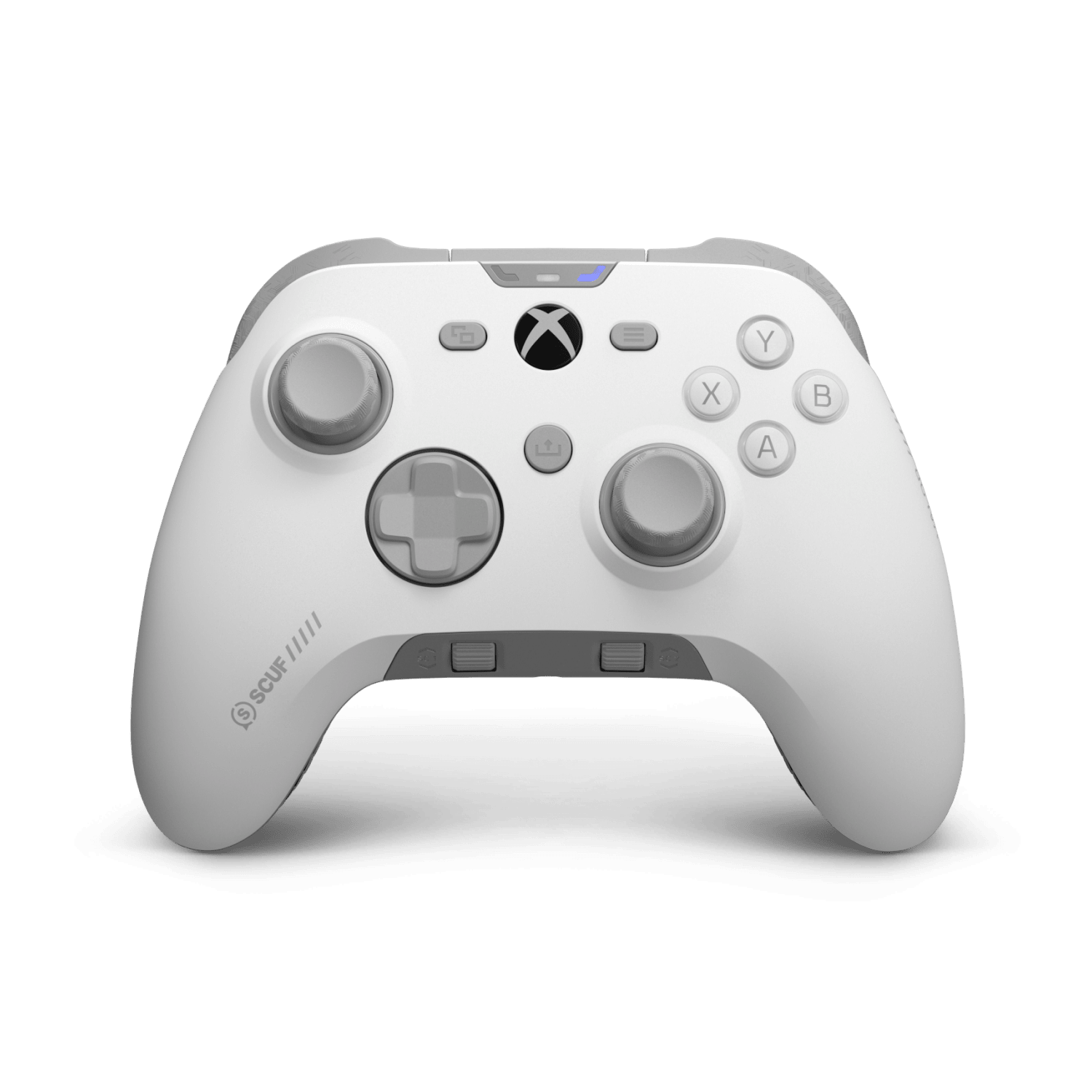
Not long ago, if you wanted an 8,000Hz controller, you sent a stock gamepad to a modding shop and waited weeks for it to come back.
That is no longer true, and the space has filled up fast. There are now retail 8K controllers, budget 8K controllers, and custom-board mod services — all quoting the same headline number.
The number is where the similarity ends. Here is how to read the category, and where SCUF Nemesis sits in it.
EVERYONE HITS 8,000HZ. THAT'S THE POINT.

Start here, because it reframes the whole decision: 8,000Hz is 8,000Hz. It is a specification, not a differentiator. Once a controller genuinely supports it, it reports to your PC 8,000 times per second, with 0.125ms between reports — same as any other.
Which means once you have decided you want 8K, the polling rate stops being the thing you are shopping for. What you are actually choosing between is everything wrapped around it — build quality, customization, connectivity, support, and whether you can get one this month or in two months.
THREE ROUTES INTO 8K
The custom mod route. Send a controller to a shop, or buy one they have already built. You get genuine 8K and often excellent customization work. What you give up: wireless is off the table entirely, lead times can run weeks, support varies enormously by shop, and you are trusting a small operation with your hardware. For players who want a specific bespoke build and are willing to wait, it is a legitimate path. For most people it is a lot of friction.
The budget retail route. A handful of brands have been aggressive on price and get 8K into the category at a point that makes it accessible. What you give up is generally in the areas that are hardest to see on a spec sheet: paddle systems are limited or absent, customization is minimal, and build materials reflect the price. If your only requirement is the polling rate number, this is the cheapest way to get it.
The premium retail route. Purpose-built 8K controllers with full paddle systems, mechanical inputs, antidrift thumbsticks, real support, and — on some models — wireless options that actually sustain 8K over the air. This is where most competitive players end up, and it is where SCUF Nemesis competes.
WHAT TO ACTUALLY CHECK BEFORE YOU BUY
Whichever direction you go, run this list first. It matters more than which brand you pick.
Is it PC-only? Every 8K controller is. Consoles cannot process 8,000Hz input rates. If you need console support, 8K is not currently available to you from anyone.
Can your setup use it? 144Hz monitor minimum and 240Hz+ ideally, a GPU sustaining 100+ FPS, a quad-core or better CPU with headroom, USB 3.0+, Windows 10 or 11, and a direct connection to a rear motherboard port. On a 60Hz display the difference between 1K and 8K is effectively zero — and on an underpowered CPU, 8K can actively hurt frame pacing. Read [What Is 8K Polling Rate — And Does It Actually Make You Faster?] before you spend anything.
Wireless or wired? A wired connection is faster and more consistent than any wireless one — that is true across this entire category, not just for us. If you will never unplug, a wired model gets you full 8,000Hz performance for meaningfully less money than a wireless model. Read SCUF Nemesis Wireless vs. Wired: Which One Should You Buy?
Are the face buttons mechanical? Membrane domes soften over time and have a vague actuation point. Nemesis uses mechanical switches on ABXY. Read Instant ABXY: Why SCUF Nemesis Uses Mechanical Switches Instead of Membrane